Finding the right size in kids' clothing should not feel like solving a puzzle — but in India, it often does. Every brand uses a slightly different sizing system, age-based labels rarely match actual body measurements, and what fits perfectly from one brand may be too tight or too loose from another. Add online shopping into the mix, and you have a recipe for returns, frustration, and a wardrobe full of clothes that do not quite fit.
This guide is your definitive resource for understanding kids' clothing sizes in India. We cover how sizing works, how to measure your child accurately, standard size charts, international conversions, and practical tips for getting the right fit — whether you are shopping online or in a store.
How Indian Kids' Sizing Works
Most Indian children's clothing brands use one of two sizing systems, and some use a confusing hybrid of both.
Age-Based Sizing
This is the most common system in India. Clothes are labelled by age range: 2-3 years, 3-4 years, 4-5 years, and so on. It is simple and intuitive, but it has a fundamental flaw — children of the same age can vary enormously in size. A tall, slim four-year-old and a petite, sturdy four-year-old may both need "4-5 years" by age but completely different dimensions in practice.
Age-based sizing works as a rough starting point, but it should never be your only reference when choosing a size.
Measurement-Based Sizing
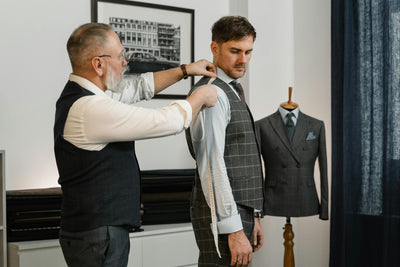
Some brands (particularly premium and international ones) use actual body measurements — chest, waist, height, and sometimes hip circumference. This is far more accurate than age-based sizing, but it requires you to know your child's measurements, which most parents do not have on hand.
The investment of five minutes to measure your child properly will save you hours of returns and exchanges. We will show you exactly how to do it below.
The Hybrid Approach
Many Indian brands combine both systems: the label says "4-5 years" but the product description includes a measurement chart. This is actually the most helpful approach, because it gives you both a quick reference (age) and a precise one (measurements). Always check the measurement chart when it is available.
Standard Size Chart for Indian Kids' Clothing
While every brand varies slightly, here is a general reference chart for children's clothing sizes commonly used in India. All measurements are in centimetres.
| Age | Height (cm) | Chest (cm) | Waist (cm) | Hip (cm) | Indian Size Label |
|---|---|---|---|---|---|
| 1-2 years | 80-86 | 48-50 | 47-49 | 50-52 | 18-20 |
| 2-3 years | 86-94 | 50-53 | 49-51 | 52-54 | 20-22 |
| 3-4 years | 94-102 | 53-55 | 51-53 | 54-57 | 22-24 |
| 4-5 years | 102-108 | 55-57 | 53-54 | 57-59 | 24-26 |
| 5-6 years | 108-116 | 57-59 | 54-56 | 59-62 | 26-28 |
| 6-7 years | 116-122 | 59-61 | 56-57 | 62-64 | 28-30 |
| 7-8 years | 122-128 | 61-64 | 57-59 | 64-67 | 30-32 |
| 8-9 years | 128-134 | 64-67 | 59-61 | 67-70 | 32-34 |
| 9-10 years | 134-140 | 67-70 | 61-63 | 70-73 | 34-36 |
Important note: This chart is a general reference. Individual brands may size slightly larger or smaller. Always cross-reference with the specific brand's size chart before purchasing.
How to Measure Your Child Accurately
You need a soft measuring tape (the kind used for sewing, not a metal one), your child in lightweight clothing, and about five minutes. Here is how to take each measurement.
Height
Have your child stand straight against a wall, without shoes, heels together, looking straight ahead. Place a flat object (a book works well) on top of her head touching the wall. Mark the wall lightly with a pencil, then measure from the floor to the mark. For toddlers who will not stand still, measure while lying flat on the floor.
Chest
Wrap the measuring tape around the fullest part of the chest, under the arms and across the shoulder blades. The tape should be snug but not tight — you should be able to slide a finger underneath. Keep the tape parallel to the ground.
Waist
Measure around the natural waistline — the narrowest part of the torso, usually just above the belly button. Again, snug but not tight. Ask your child to breathe normally while you measure; holding breath in gives an inaccurate reading.
Hip
Measure around the fullest part of the hips and buttocks. This is particularly important for bottoms, skirts, and dresses with fitted waists.
Inseam (for trousers and leggings)
Measure from the crotch to the desired length — usually the ankle bone. This is easier to do on a pair of trousers that fits well: lay them flat and measure from the crotch seam to the hem.
Record and Update
Write down these measurements and update them every 3-4 months. Children grow fast — a measurement from six months ago could be off by several centimetres. Keep the note on your phone so it is always accessible when you are shopping.
International Size Conversion
If you are buying from international brands available in India (or ordering from abroad), this conversion table helps you translate between sizing systems.
| Indian (Age) | US Size | UK Size | EU Size | Height (cm) |
|---|---|---|---|---|
| 2-3 years | 2T-3T | 2-3 | 92-98 | 86-94 |
| 3-4 years | 4T | 3-4 | 98-104 | 94-102 |
| 4-5 years | 5 | 4-5 | 104-110 | 102-108 |
| 5-6 years | 6 | 5-6 | 110-116 | 108-116 |
| 6-7 years | 6X-7 | 6-7 | 116-122 | 116-122 |
| 7-8 years | 7-8 | 7-8 | 122-128 | 122-128 |
| 8-9 years | 8-9 | 8-9 | 128-134 | 128-134 |
| 9-10 years | 10 | 9-10 | 134-140 | 134-140 |
A word of caution: US sizes tend to run larger than Indian and European sizes. UK sizes are generally similar to Indian age-based sizing. EU sizes are height-based (the number is the approximate height in centimetres), which is actually the most logical system of all.
Brand-to-Brand Variation in India
This is perhaps the most frustrating aspect of kids' clothing sizing in India: there is no true standardisation. A "4-5 years" from one brand may be noticeably different from the same label at another brand.
Budget and mass-market brands tend to run slightly smaller and narrower. Premium brands often have a more generous fit with room for growth. International brands available in India (Gap, H&M, Zara) follow their own global sizing, which may not align with Indian body types — they tend to run longer and leaner.
The solution is not to memorise every brand's sizing quirks (impossible) but to always check the specific brand's size chart and compare it to your child's actual measurements. Never assume that because she wears a "5-6 years" in Brand A, she will wear the same in Brand B.
When to Size Up vs Size Down
This is the eternal question, and here are clear guidelines:
Size Up When:
- Your child's measurements fall between two sizes — always go up, not down.
- You are buying for a season ahead (summer clothes bought in spring, for example).
- The brand is known to run small or shrink after washing.
- The fabric has no stretch (woven cotton, linen). These do not give.
- You want the garment to last more than one season.
Size Down (or Stay True) When:
- The brand is known to run large or have a very relaxed fit.
- The garment has significant stretch (jersey, knits, leggings).
- It is a special occasion outfit that needs to fit well right now (not for future growth).
- Too-large clothes can be a safety concern — particularly for active play, climbing, and cycling.
Common Fit Issues and Solutions
Even with perfect measurements, some fit issues are common in children's clothing. Here is how to handle them:
Dress fits in the chest but is too long: This is very common in slim children. Hemming is the simplest fix — a local tailor can do this for Rs. 50-100. Alternatively, size down and look for brands with a wider fit.
Waist fits but legs are too long/short: For trousers, leggings, and jeans, many parents buy by waist measurement and adjust the length. Cuffing or rolling up trouser hems is perfectly acceptable and often looks intentional.
Chest fits but sleeves are too short: This happens with children who have longer arms relative to their torso. Roll the sleeves to three-quarter length — it looks deliberately styled rather than ill-fitting.
Everything fits but the neckline is too tight: Some children are sensitive to close-fitting necklines. Look for boat necks, V-necks, or wider round necks. Stretching a tight neckline gently while damp can help, but be careful not to distort the shape.
Growth Room Considerations
Children grow in spurts, not gradually. You might buy a perfectly fitting outfit and find it too small within weeks when a growth spurt hits. Here is how to plan for growth without buying clothes that swim on her now.
For everyday wear, one size up from her current exact fit gives 3-6 months of growth room, depending on her age and growth pattern. For formal or occasion wear, buy for current fit — she will look best in clothes that fit properly, and occasion wear is worn infrequently enough that it does not need to last as long.
Adjustable features are your friends: elastic waistbands, adjustable straps, tie-backs, and roll-up sleeves all extend the wearable life of a garment. When shopping, actively look for these features — they are the difference between a three-month outfit and a nine-month one.
Online Shopping Fit Tips
Buying clothes online without being able to touch the fabric or try it on requires a slightly different approach. Here are the rules:
- Always check the size chart — not the age label. The size chart is on the product page for a reason. Use it.
- Read the product description for fit clues — "relaxed fit," "slim fit," "true to size," and "oversized" all mean different things and affect your size choice.
- Check the fabric composition — stretchy fabrics (with elastane or spandex) are more forgiving of slight size mismatches than non-stretch woven fabrics.
- Read reviews — other parents often mention whether items run large, small, or true to size. This is goldmine information. For a complete checklist on buying kids' clothes online, we have a detailed guide.
- Know the return policy — before you buy, know what happens if the fit is wrong. A good return policy makes online shopping virtually risk-free. For more on choosing the right size online, check our dedicated guide.
When Sizes Do Not Tell the Full Story
Sometimes, despite checking every chart and measuring twice, the fit is still off. This is normal and not a reflection of your shopping skills. Children's bodies are wonderfully varied — some carry weight in different places, some have longer torsos, some have wider shoulders. No size chart can account for every body type.
The best approach is to find 2-3 brands whose sizing consistently works for your child's body type, and shop primarily from those brands. Once you know her size in a brand that fits well, buying from that brand again becomes nearly effortless.
And if something does not fit? Do not let it sit in the wardrobe unworn. Exchange it, return it, pass it on, or get it altered. Life is too short — and children grow too fast — for clothes that do not fit properly.
For age-specific sizing guidance and style recommendations, explore our collection by age: girls' dresses, girls' tops, girls' bottoms, and girls' sets. For understanding when it is time to size up, we have a practical guide on the signs to watch for.